
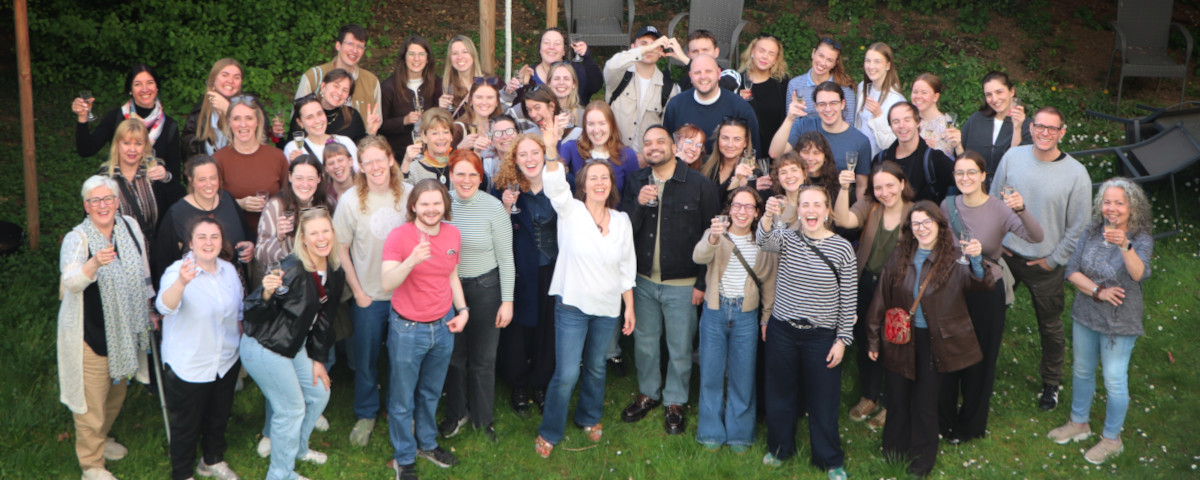
First Erasmus Blended Intensive Programme on Trauma-Sensitive Media Work in Mainz | 22.04.2026
Empowering and giving a voice
What does it mean for people to recount profound, life-changing, indeed traumatic experiences in films, podcasts or newspaper reports? To open up to journalists or documentary filmmakers and tell them what the flood in the Ahr Valley was like for them back then, when they lost their homes and perhaps even loved ones? Or how they feel 15 years after the Love Parade disaster in Duisburg? Or how they managed to come to terms with their experiences during the terrorist attack on Berlin’s Breitscheidplatz?
In the day-to-day work of journalism, there is often little room for such considerations. Whilst the industry and researchers have been paying increasing attention to the mental health of journalists in recent years, there is still little knowledge and awareness of how those affected feel when our reporting may directly transport them back to traumatic moments in their lives. And the limited research available on the subject does not reflect well on the industry: many people fear that media coverage might even risk re-traumatisation, not least due to the protracted nature of potential social media discussions that frequently follow a news report. Yet there are ways in which we, as journalists, documentary makers, but also as social workers and psychotherapists, can help ensure that not only is no further harm caused, but that our work might even give a voice to those whom no one else hears.
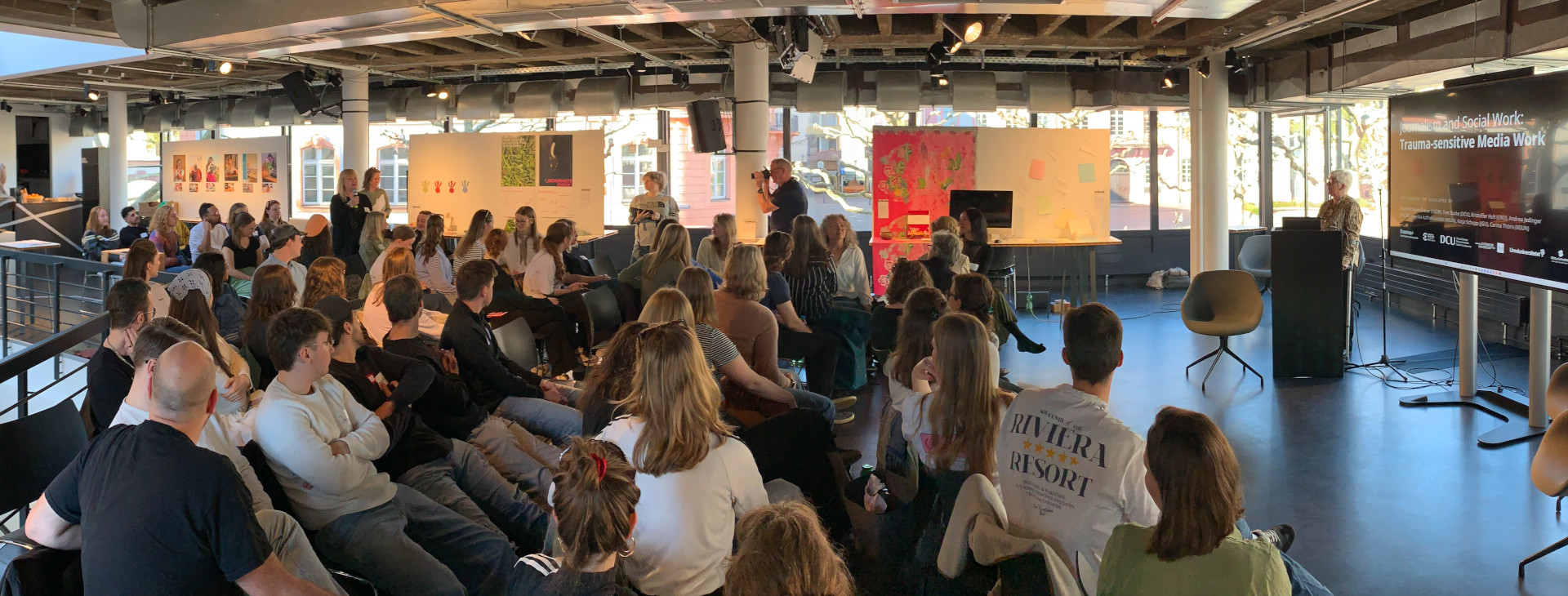
Opening at LUX Mainz with speaker Angelina Fusco | Photo by jens Hartmann
Trauma – it can affect anyone. And it happens when we are suddenly, once or repeatedly, and for a long time, at the mercy of a situation where we feel powerless, and our mental and physical integrity is threatened: be it through natural disasters, wars, domestic, sexual, structural or other forms of violence, illness, poverty or crime. What is part of our job as journalists is, for the people who speak to us about it, often the end of life as they knew it.
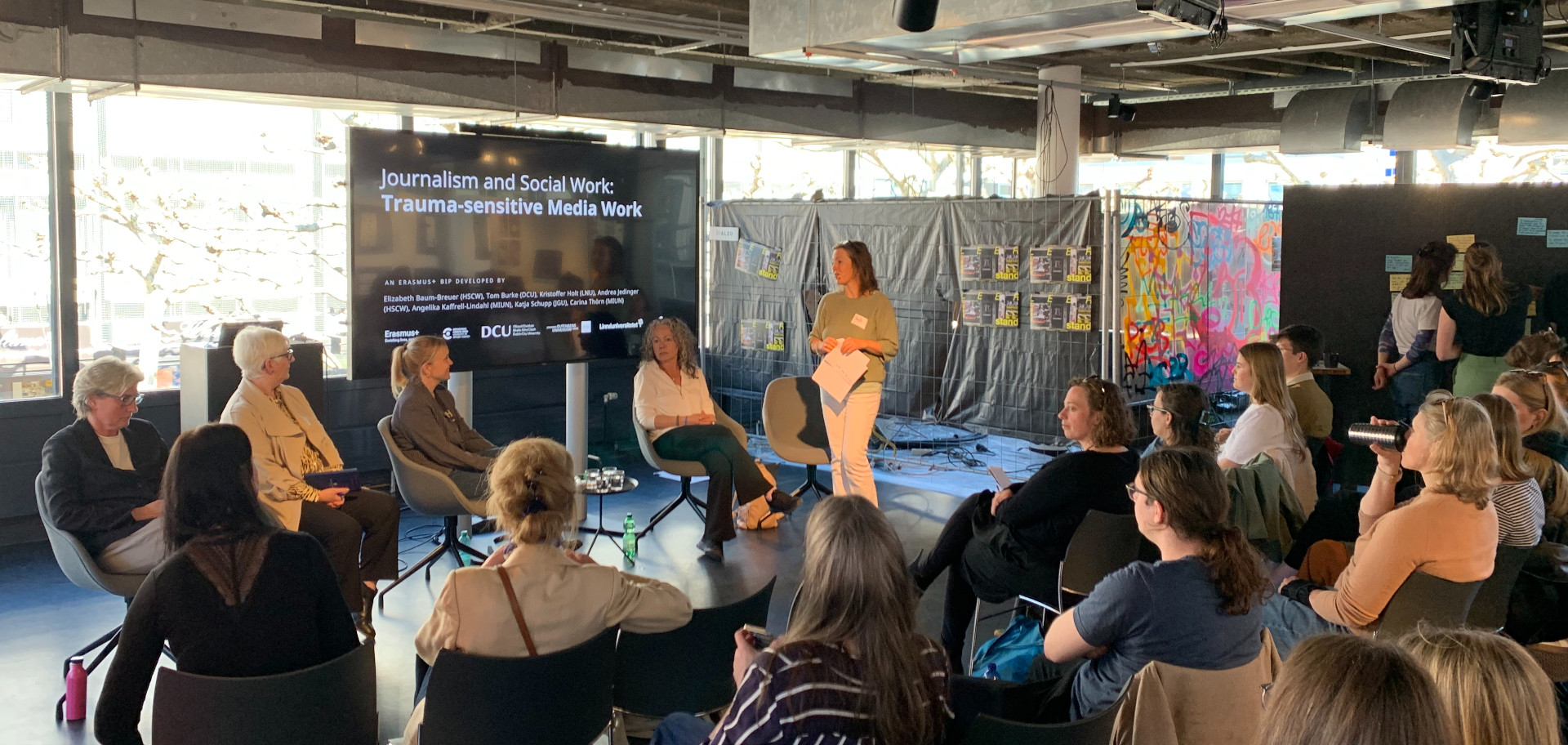
Panel discussion at LUX Mainz | Photo by jens Hartmann
That is why, in Mainz, we want to make awareness of trauma-sensitive media work an integral part of the training at the Journalism Seminar. The Erasmus+ Blended Intensive Programme ‘Journalism and Social Work: Trauma-sensitive Media Work’ was a first, interdisciplinary pilot project in this regard: together with the University of Applied Sciences for Social Work and Education (HSCW) in Vienna, Dublin City University (DCU) in Ireland, Linnaeus University (LNU) in Växjö/Kalmar and Mittuniversitetet (MIUN) in Östersund, Sweden, and the University of the Arts, Bern, Switzerland, supported by our fantastic JGU International Team, the approximately 60 participants spent a week exploring the field in an interdisciplinary manner. The exchange with colleagues from journalism, documentary film, social work, psychology and psychotherapy was particularly valuable: Angelina Fusco, for example, who has reported for the BBC from Belfast, Northern Ireland, for decades and shares her experiences in training sessions; Dr. Ingeborg Kraus, an expert on the consequences of prostitution; trauma therapist Silja Rothe; psychotherapist and trauma-sensitive media coach Fee Rojas; community management expert Sophia Krafft from German PSM SWR; screenwriter and lecturer Tom Burke; documentary filmmaker Martina Priessner together with the main protagonist of her film ‘Die Möllner Briefe’, Ibrahim Arslan; MBSR trainer and journalist Björn Staschen; actresses Janey Drößler and Laura Fischer – and many more …
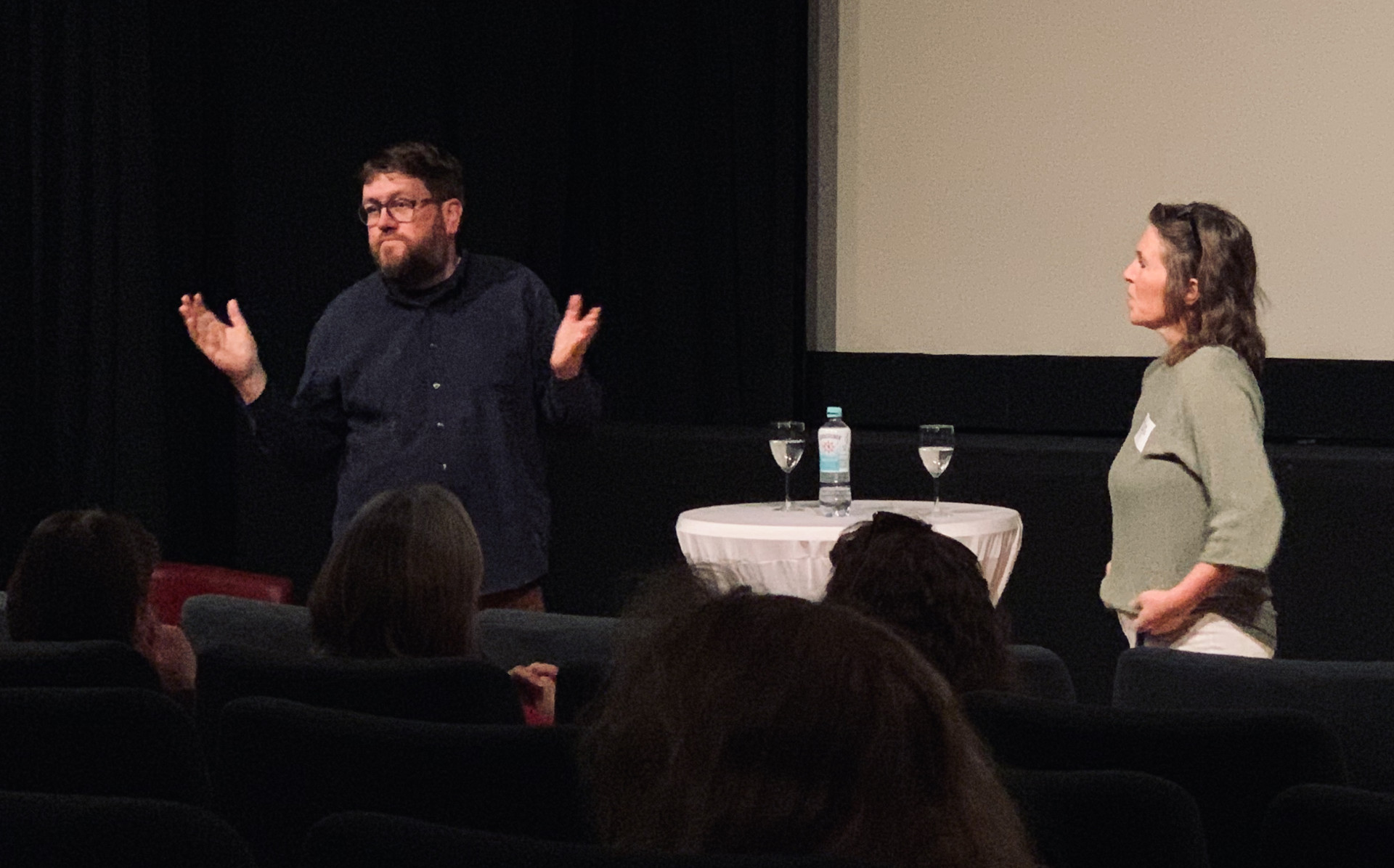
Film screening and discussion with Tom Burke | Photo by jens Hartmann
And it was precisely this unique combination of journalistic, documentary and social practice, together with the keen interest of all participants, that made the week so special. Through lectures, workshops, film screenings and discussions, we explored the question of how to handle sensitive stories responsibly – always with the aim not only of avoiding further harm, but also of creating space for unheard voices in public discourse.
Another key element of the BIP was the practical work: Nine podcast projects were developed in international teams, each addressing the framework conditions of trauma-sensitive media work in very different ways; these will be published shortly. The creative process, the intensive collaboration since January and the final presentations impressively demonstrated how much can be achieved in a short space of time when people come together with commitment, curiosity and openness – across disciplinary boundaries.
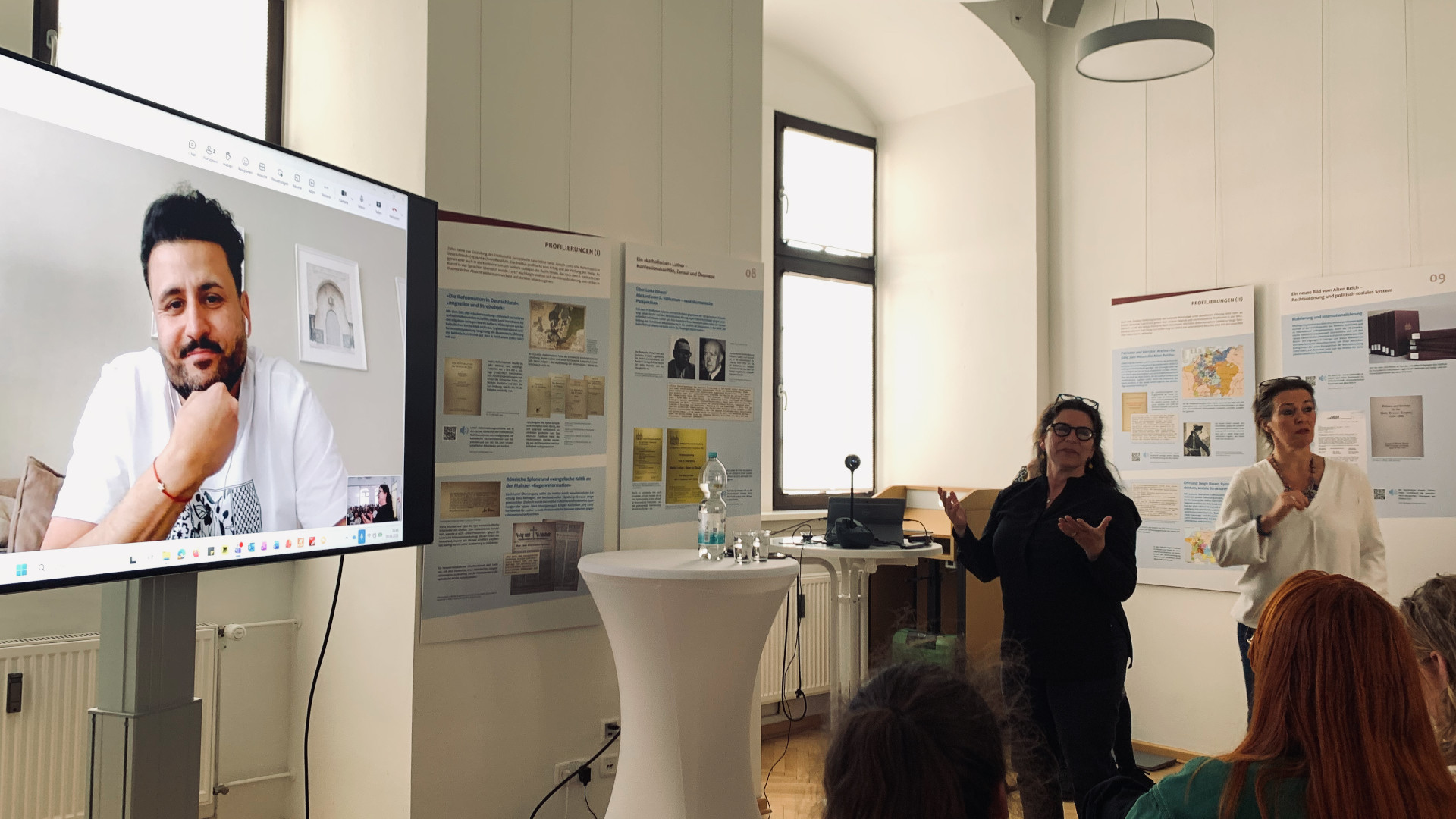
Film screening of ‘Die Möllner Briefe’ and discussion with protagonist Ibrahim Arslan, director Martina Priessner and psychotherapist Fee Rojas | Photo by jens Hartmann
Alongside all the work on the content, it was ultimately the sense of community that made this week more than just the sum of its parts. And since, as we all know, the way to the heart is (also) through the stomach, the daily international buffet certainly played its part: from Swedish crispbread to Irish Guinness chocolate and German sourdough bread, right through to Styrian pumpkin seed oil… a week full of sensory experiences that will linger long in the memory.
Trauma often arises in relationships – and can only be healed through new, different relationships.
says Isabelle, the protagonist of one of my films, who was re-traumatised twelve years after leaving prostitution. We can only bring about change if we start with our own work as journalists, documentary filmmakers and social workers – and courageously renegotiate fundamental conditions: creating safe spaces for those affected, conducting thorough research and, on this basis, consciously choosing subjective formats such as reports or interviews to give people a voice and avoid retraumatisation.
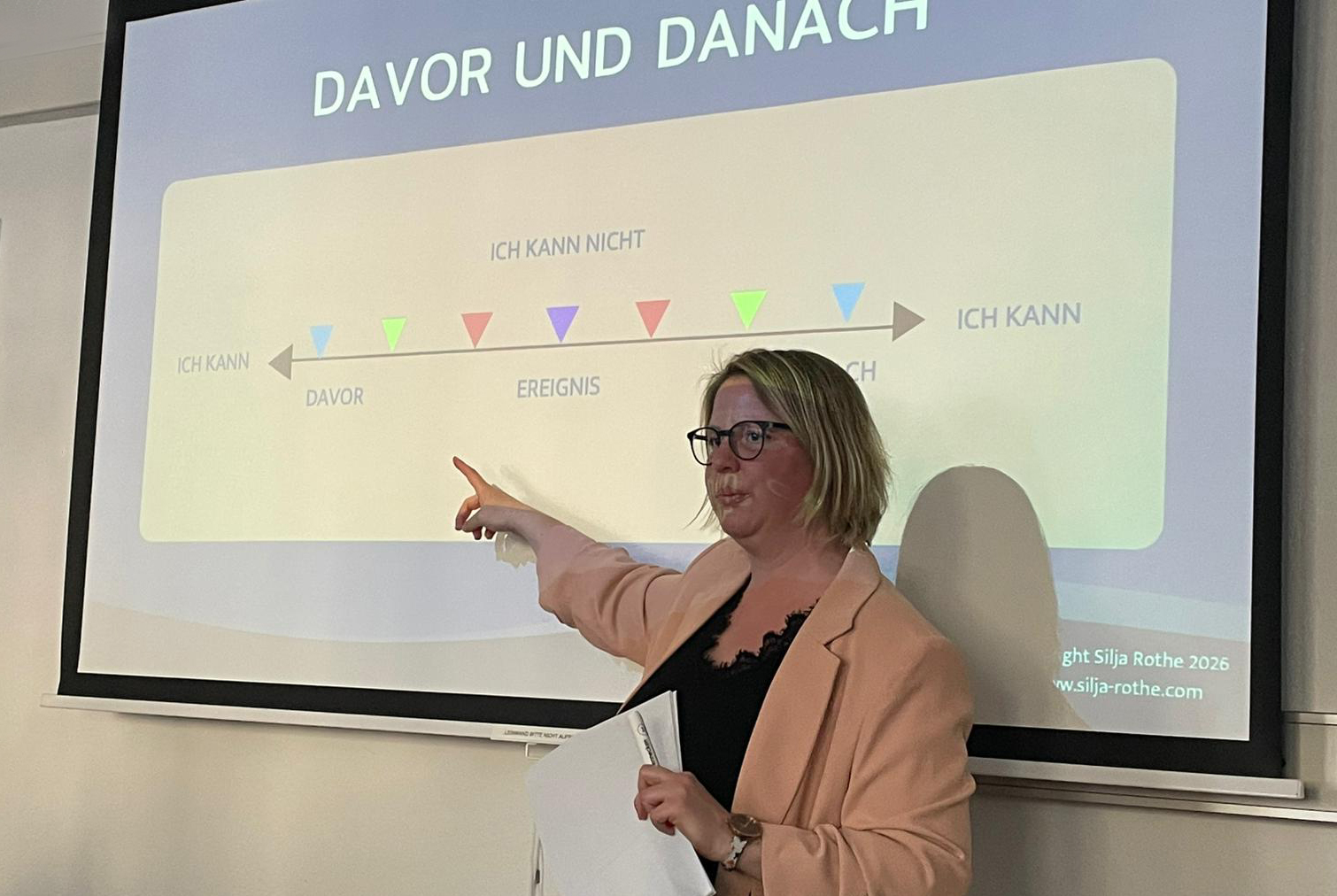
Workshop by Silja Rothe | Photo by Katja Schupp
My sincere thanks go to my colleague Jens Hartmann for his invaluable support throughout, to our fantastic JGU International Team and to our partner universities of the project: Andrea Jedinger and Elizabeth Baum-Breuer from the University of Applied Sciences Vienna (HSCW), Angelika Kaffrell-Lindahl and Carina Thörn from Mittuniversitetet (MIUN) Östersund/Sweden, Tom Burke from Dublin City University (DCU) Ireland, Linnaeus University (LNU) Växjö & Kalmar/Sweden, and finally the University of the Arts, Bern, Switzerland.
Last but not least: Thank you to the more than 50 participants, who made the week what it became through your dedication, interest, curiosity and openess!
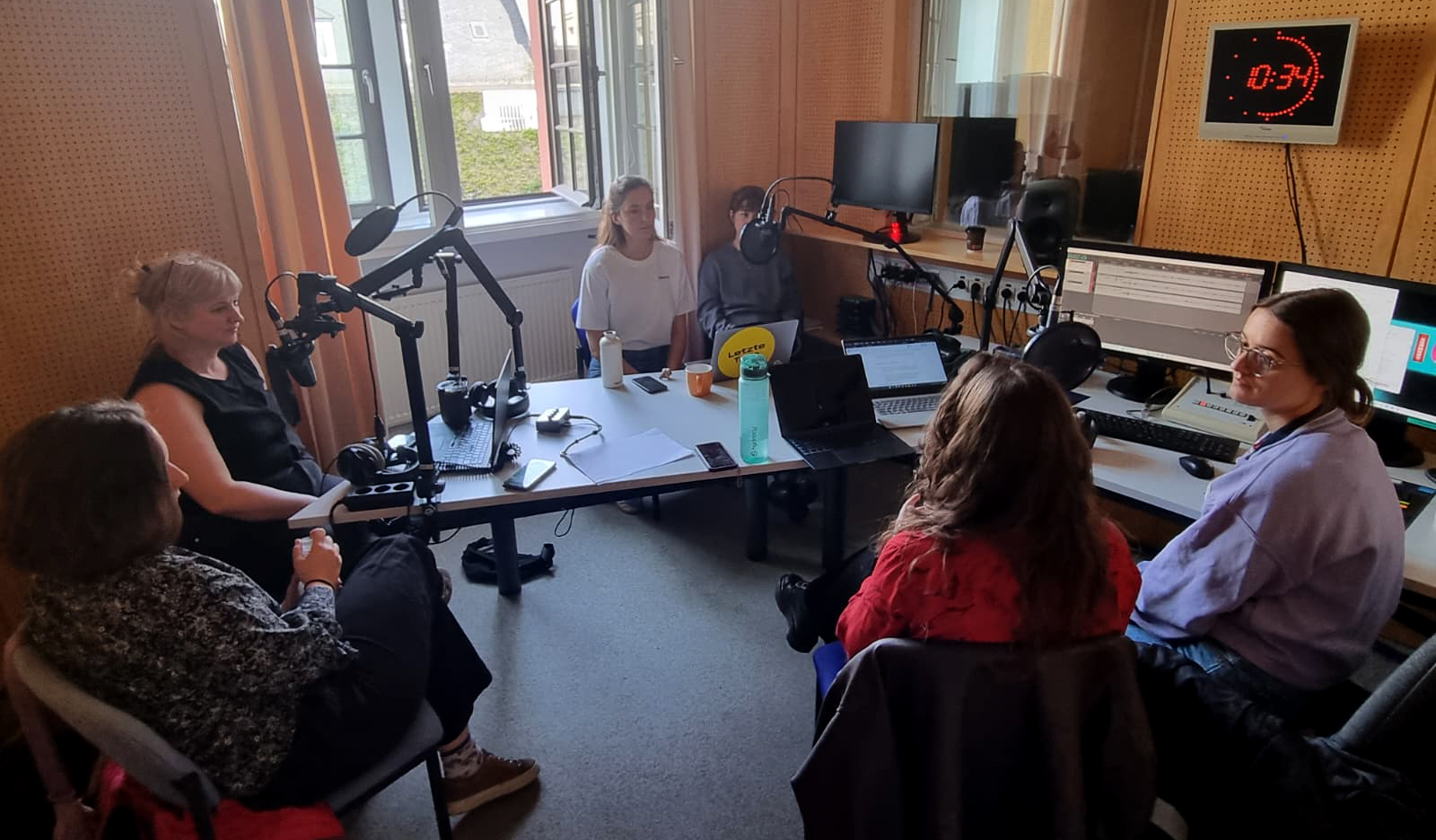
Podcast recording in the radio studio